
Guide to Moonflower Canyon Recreation Area
Located less than 40 minutes from ULUM Moab, Moonflower Canyon Recreation Area is one of Moab’s most accessible and rewarding outdoor destinations. Set along Kane Creek Road near the Colorado River and bordering the Spanish Valley, this Bureau of Land Management (BLM) site is well known among locals for its ancient rock art, easy hiking, scenic canyon views, and technical canyoneering – all without an entrance fee.
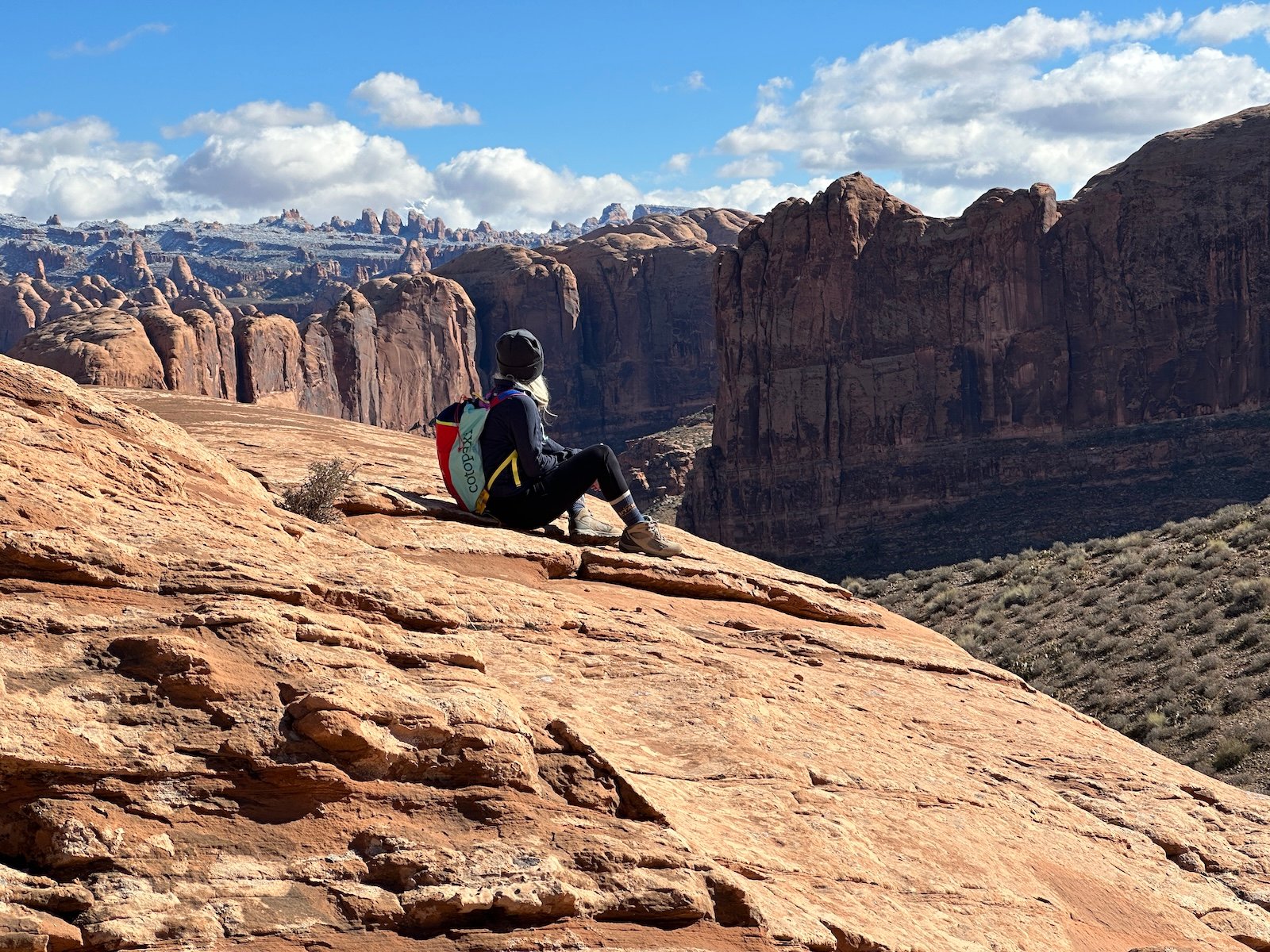
Though close to town, Moonflower Canyon feels tucked away. A shaded side canyon carved into towering red-rock bluffs, it holds stories etched in sandstone thousands of years ago. Its rare blend of history and outdoor adventure makes it a natural addition to any Moab itinerary and a destination worth slowing down for. Here’s our guide to visiting Moonflower Canyon.
Why Visit Moonflower Canyon
Moonflower Canyon is as magical as it sounds. In the spring, the canyon floor comes alive with greenery and the blooming moonflower (sacred datura), the plant that gives the canyon its name. This small but lush oasis contrasts beautifully with the surrounding desert landscape, offering shade, cooler air, and desert serenity, making it easy to see why people have gathered here for refuge, ceremony, and survival for thousands of years.
Today, Moonflower Canyon offers visitors a chance to connect deeply with both natural beauty and history, whether you’re visiting for a short walk, a family-friendly adventure, or a more technical canyon descent.
Getting to Moonflower Canyon
Moonflower Canyon Recreation Area is located approximately 3.5 miles from the junction of US-191 and Kane Creek Road, just southwest of Moab.
To reach the site, turn west off Highway 191 onto Kane Creek Road (near McDonald’s) and follow the road for just over three miles. The signed parking area for Moonflower Canyon will be on the right, along with the trailhead for the Moonflower Canyon Trail.
There are restrooms, but no drinking water. Be sure to bring plenty of water, sun protection, and snacks, especially during the summer months. As always, practice Leave No Trace principles and pack out everything you pack in to help preserve this area.
Moonflower Canyon Hiking
Connect with nature on a short, scenic hike that’s perfect for visitors of all ages and abilities.
Moonflower Canyon Trail
Distance: 0.6 miles out-and-back
Difficulty: Easy
The Moonflower Canyon Trail follows a sandy wash through a canyon surrounded by towering sandstone walls. Early on, you’ll pass one of the canyon’s highlights: an impressive rock art panel that offers a glimpse into the area’s ancient past.
As you continue through the canyon, cottonwoods provide shade and quiet company. The trail leads to a small natural spring and pool, a mini-oasis in the desert. The hike takes about an hour to complete.
Moonflower Canyon Petroglyphs
One of Moonflower Canyon’s most magical features is its collection of ancient petroglyphs, located near the canyon entrance, rather than inside the canyon.
The sandstone cliffs form an outdoor gallery of images etched by Indigenous peoples during the Archaic to Formative Periods (approximately 5500 BC – 1275 AD). Look closely, and you’ll spot deer, bighorn sheep, snakes, human figures, and abstract symbols – each one a record, a story, and a living piece of history.
These petroglyphs are protected and are an invaluable connection to Moab’s history. Please admire them from a distance and do not touch the rock art, so they can be preserved and enjoyed for generations to come.
Indian Ladder Petroglyphs (Moonflower Canyon Ladder)
At the entrance of Moonflower Canyon, you’ll find one of the area’s distinctive features: a log ladder wedged into a natural crack in the rock.
Made up of several notched logs, the ladder allows visitors to climb about 30 feet up to a rocky outcropping above, where more petroglyphs can be found. This method has been used to access higher ground for thousands of years, and offers a fun, memorable experience for adults and kids alike to connect with the past (and it makes for a great photo opp).
Birthing Rock Petroglyphs
Another nearby site is Birthing Rock, located just down Kane Creek Road from Moonflower Canyon.
This panel features a depiction of a mother giving birth, along with other carvings, etched onto a large, square boulder protected by a fence. The rock is easily accessible via a short walk from a roadside pull-off, making it a quick but meaningful stop.
Make a Day of Moab Rock Art
Moonflower Canyon is a stop on the Moab Rock Art Tour, a self-guided driving route that connects several petroglyph sites around the area. Visiting multiple spots in a day offers a powerful way to experience Moab not just as an adventure destination, but as a place shaped by thousands of years of human presence.
Here’s our guide to petroglyphs in Moab and where to find them.
Moonflower Canyon Canyoneering
Moonflower Canyon also offers a short but technical canyoneering route known for its dramatic double rappel.
The route involves a steep approach hike with roughly 1,000 feet of elevation gain to reach the canyon rim, followed by a technical descent that includes a nearly 200-foot rappel. While brief, the route is demanding and requires proper gear and experience. Due to the risk of flash flooding and changing anchor conditions, this adventure is best for seasoned canyoneers or those exploring with an expert guide.
Guided Adventures Near Moonflower Canyon
A visit to Moonflower Canyon pairs well with nearby guided adventures that can be easily added to a stay at ULUM Moab.
Take a Custom Moab Adventure Tour
Discover the hidden gems of Greater Moab on a fully customizable tour led by an expert guide. These educational and adventurous outings explore significant sites, from ancient petroglyphs and dinosaur tracks to remote canyons and scenic overlooks. Moonflower Canyon can be one of many stops, tailored entirely to your interests.
Paddle the Colorado River
Experience the beauty of the Colorado River from the water. Choose from calm-water paddleboarding and kayaking or exciting whitewater rafting, all set against a backdrop of towering red-rock cliffs and desert solitude.
Go Canyoneering
Combine hiking, climbing, and rappelling on a guided canyoneering adventure through some of the region’s most striking slot canyons. Popular routes include Entrajo Canyon, Zig Zag Canyon, and Medieval Chamber, each offering a unique way to explore Moab’s sculpted sandstone terrain with an expert guide. This is a great way to try canyoneering for the first time.
Where to Stay Near Moab, Utah
After a day spent exploring Moonflower Canyon and the surrounding red-rock desert, return to a peaceful retreat designed for comfort, connection, and immersion in nature.
Surrounded by breathtaking desert landscapes and just steps from Looking Glass Arch, ULUM Moab offers upscale safari-inspired accommodations in a secluded setting south of town. With sweeping views, wellness amenities, full-service dining, nightly s’mores, and easy access to Canyonlands National Park, ULUM places world-class exploration right beyond your tent.