Best Hikes in Utah: Grandstaff Canyon
Just outside of Moab, Grandstaff Canyon is one of Utah’s most scenic and serene desert escapes. This red rock oasis offers a refreshing change of pace from nearby national parks – inviting hikers to slow down, listen to the sound of trickling water, and discover the lush side of the desert. With its sandstone cliffs, spring-fed stream, and the stunning Morning Glory Natural Bridge, Grandstaff Canyon deserves a spot on any list of the best hikes in Utah and is reason enough to add a few extra days in Moab to explore beyond the parks.
Here’s everything you need to know about hiking in Grandstaff Canyon.
About Grandstaff Canyon
Grandstaff Canyon is a small, scenic red rock canyon where willows line the trail, frogs sunbathe along the water, and sandstone walls tower on either side. It’s a rare ribbon of green in the desert fed by a year-round stream that flows into the Colorado River across from Arches National Park.
Kids enjoy spotting wildlife, such as frogs and crayfish, in the shallow water, and history enthusiasts will appreciate the canyon’s ties to Moab’s early ranching era in the 1800s, when settlers chose this area for its natural spring just below Morning Glory Bridge, which you can still visit to this day.
Maintained by the Bureau of Land Management (BLM), the site is free to visit, and no permit is required to hike the Grandstaff Canyon Trail to Morning Glory Bridge. The area is popular among families, school groups, and dog owners, and is especially appealing for anyone looking to experience Moab’s quieter side. There’s a convenient parking area and public restrooms near the trailhead.
Hiking the Grandstaff Canyon Trail
Distance: 4.3 miles round trip (out-and-back)
Difficulty: Moderate
Average Time: 4 hours
Elevation Gain: 380 feet
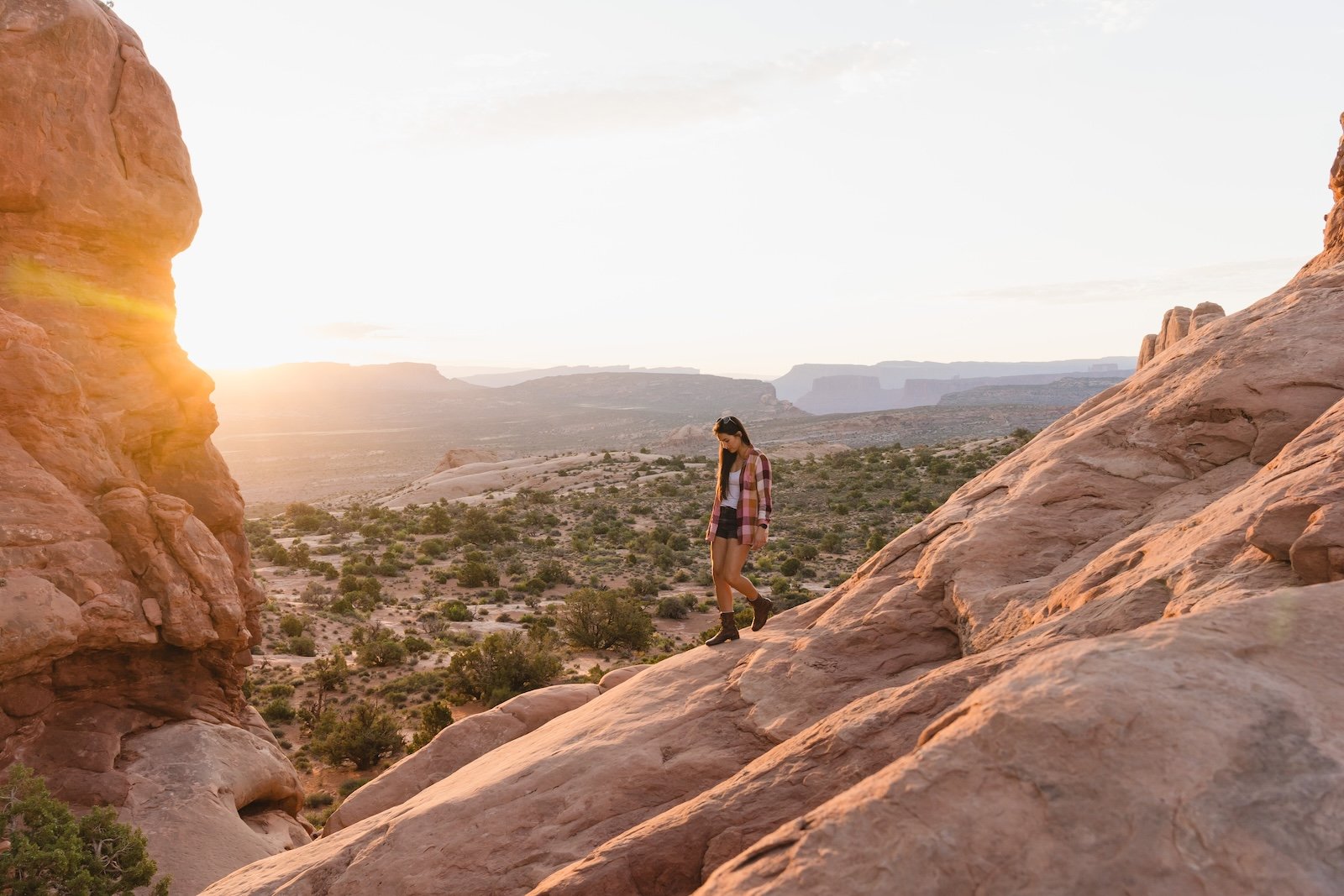
The Grandstaff Canyon Trail is one of Moab’s most rewarding half-day hikes – it’s scenic, moderately challenging, and shaded in parts. The route follows a clear stream through the length of the canyon, crossing the water several times as it winds between high sandstone cliffs. It’s one of the few trails in the region where you can wade through cool, shallow water beneath desert walls that seem to stretch toward the sky.
Expect a mix of easy walking, light scrambling, and a few creek crossings that may involve rock-hopping to stay dry or stepping through ankle-deep water to cool off. The trail is well-marked and easy to follow – just let the stream be your guide.
While the entire hike is enjoyable, the real payoff comes at the turnaround point at Morning Glory Natural Bridge, a breathtaking sandstone span measuring 243 feet long, making it the sixth-longest natural rock bridge in the U.S. The bridge arches gracefully between the canyon walls, creating a shaded grotto. If you listen, you will hear the trickling water echo off the canyon walls. This natural spring keeps the canyon’s hanging gardens lush year-round, even in the desert environment.
Morning Glory Bridge is also a popular site for rock climbers who rappel from the top. Even if you’re not climbing, this is a perfect spot to rest, take photos, or enjoy a picnic before retracing your steps through the canyon.
Getting to Grandstaff Canyon
Grandstaff Canyon is located northeast of Moab, along Highway 128, also known locally as River Road.
Directions from Moab:
From downtown, head north on Highway 191 toward the Colorado River bridge. Just before crossing, turn right onto Highway 128 and follow it for about 3.2 miles. You’ll see the Grandstaff Canyon Trailhead on your left, with a small parking lot and signage marking the start of the trail.
From ULUM Moab, it’s an easy 45-minute drive north via Highway 191. The road follows the river and offers some of the region’s most striking scenery for a preview of the red rock wonderland that awaits.
Practical Tips for Visiting Grandstaff Canyon
A bit of preparation goes a long way toward a memorable day in Grandstaff Canyon.
- Bring plenty of water and sip it often. The desert air is dry, and the sun is intense, so hydration is key.
- Wear water-friendly hiking shoes with good traction. You might get your feet wet during stream crossings.
- Watch for poison ivy, which grows in shaded areas near the spring.
- Use hiking poles for balance during crossings (optional).
- Visit in the spring or fall, or early morning during the summer, when temperatures are more comfortable.
- Stay on the trail to protect the fragile desert environment, and always pack out what you pack in to help leave no trace.
- Check weather conditions before you go to avoid flash flooding.
Make It a Full Day of Adventure
Located near the Sand Flats Recreation Area and the Hell’s Revenge 4×4 Trail, Grandstaff Canyon pairs easily with Moab’s other memorable outdoor adventures. A perfect day might be spent with a morning hiking through the canyon, then capping the evening with a sunset Hummer safari along Hell’s Revenge, where you can look back across the canyon, spot ancient dinosaur tracks, and soak in an unforgettable Moab sunset.
It’s easy to add guided adventures to your stay at ULUM Moab. Simply reserve your stay, select your experience, and choose your preferred date and group size. Our Adventures Team will handle the rest.
Where to Stay in Moab
Surrounded by breathtaking landscapes and just steps from Looking Glass Arch, ULUM Moab, a Two MICHELIN Key Resort, offers upscale accommodations in a secluded desert setting south of Moab, with sweeping views of Canyonlands National Park. Relax and refresh in your private, safari-inspired Suite Tent, featuring a master en-suite bathroom. Dine at the full-service restaurant and unwind with wellness amenities framed by stunning red rock vistas. Open March through October, ULUM Moab is the perfect base for adventure and immersion in nature, where some of the best hikes in Utah begin just beyond your tent.
For more hikes in Moab, check out our guides to Arches, Canyonlands, and high-alpine trails in the nearby La Sal Mountains for cooler temperatures year-round.