
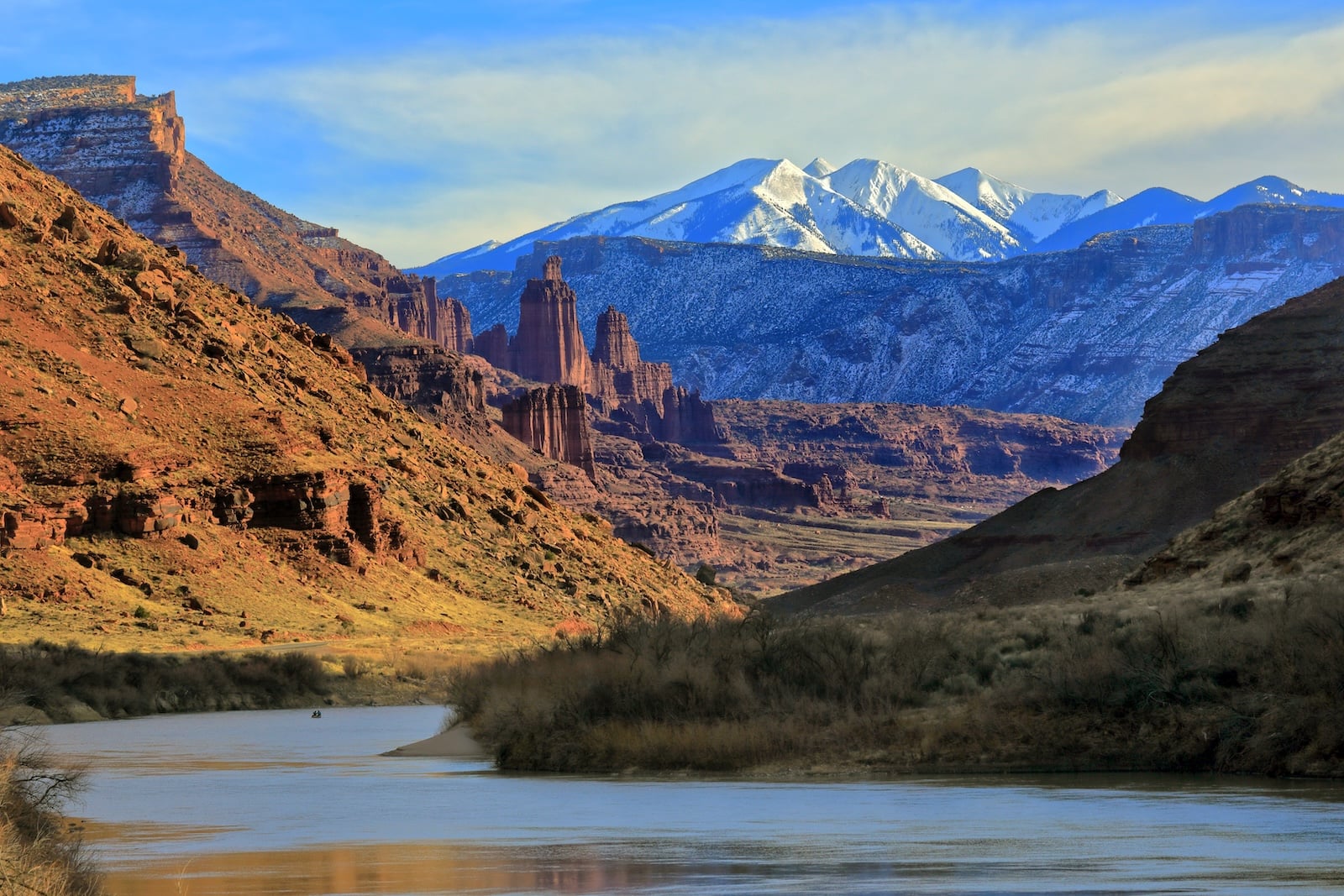
Fisher Towers Near Moab: Hiking, Climbing, and Scenic Views
Rising from the desert northeast of Moab, Utah, Fisher Towers is a maze of soaring fins, pinnacles, and sandstone spires sculpted into seemingly impossible forms. The tallest formations tower hundreds of feet above the landscape, creating one of Utah canyon country’s most unique red rock scenes. Explore them along a winding hiking trail, behind the lens of your camera, on a Moab scenic drive, or by climbing the towers themselves. Whether you have a few hours or a full day, here’s how to experience Fisher Towers near Moab.
About Fisher Towers
Fisher Towers look strikingly different from the smooth sandstone arches and sweeping canyon walls found elsewhere around Moab. Formed from layers of sandstone and darker, more erosion-prone rock, these narrow towers have a rugged, otherworldly appearance.
The most recognizable formations include the Kingfisher, Echo Tower, Ancient Art, and the Titan. Rising roughly 900 feet, the Titan is believed to be the largest freestanding sandstone tower in the U.S. It’s especially striking as light shifts and deepens its colors and casts long shadows across the desert.
Fisher Towers is located on public land managed by the Bureau of Land Management, and there is no fee to hike the trail. The recreation site has parking and vault toilets but no drinking water, so pack plenty of water and snacks for your visit.
Hiking Fisher Towers Trail
Fisher Towers National Recreation Trail
Distance: 4.4 miles round trip | Difficulty: Moderate
One of the best ways to experience Fisher Towers is by hiking the Fisher Towers National Recreation Trail around the base of the formations. The trail extends 2.2 miles each way (4.4 miles out and back). At the turnaround point, a ridge offers expansive views across the Colorado River basin, Castle Valley, and the Book Cliffs.
The trail begins with a descent into a small canyon before climbing toward the towers. From there, it crosses sandy terrain and slickrock beneath the Kingfisher, Echo Tower, and the Titan. Along the way, you’ll see different views of hidden ridges and spires backed by the snowcapped La Sal Mountains in the distance.
Although the elevation gain is gradual, the trail has uneven terrain, exposed sections, and a short ladder. Allow 3-4 hours to complete the hike at a relaxed pace, with plenty of time for photos. You can also turn around earlier and still enjoy impressive views.
Remember to look up as you hike. You may spot climbers moving along the towers.
Rock Climbing at Fisher Towers
Fisher Towers is a well-known rock climbing destination in Moab for experienced desert climbers. Its soft, sometimes crumbly rock and exposed routes require specialized skills, but those prepared for the challenge can climb some of the most storied formations in the Moab area.
Ancient Art is perhaps the best-known climb. Most climbers ascend via the multi-pitch Stolen Chimney route, navigating chimneys, narrow ledges, and exposed sections before reaching the formation’s corkscrew-shaped summit. The final moves lead onto a tiny platform that appears to balance impossibly above the desert, rewarding climbers with sweeping views across Fisher Towers and the Colorado River basin.
The Finger of Fate on the Titan is another legendary route. This demanding big-wall climb rises roughly 900 feet over multiple pitches and combines free and aid climbing on steep, exposed terrain. It’s considerably more technical and best suited to highly experienced desert climbers.
If you want to climb at Fisher Towers, consider booking a trip with an expert Moab climbing guide. Guided excursions provide technical equipment, route knowledge, and desert-climbing expertise for a safe and enjoyable climb.
Photography at Fisher Towers
Fisher Towers’ mix of red rock, open desert, and mountain scenery makes the area a photographer’s playground. Along the trail, changing perspectives make for opportunities to capture the towers, hidden spires, and surrounding landscape in memorable compositions.
The golden hours around sunrise and sunset offer cooler conditions and softer light, while late-afternoon sun brings out the towers’ rust-colored tones and shadows. For wider landscape shots, stop at pullouts along Highway 128 to photograph the formations from a distance.
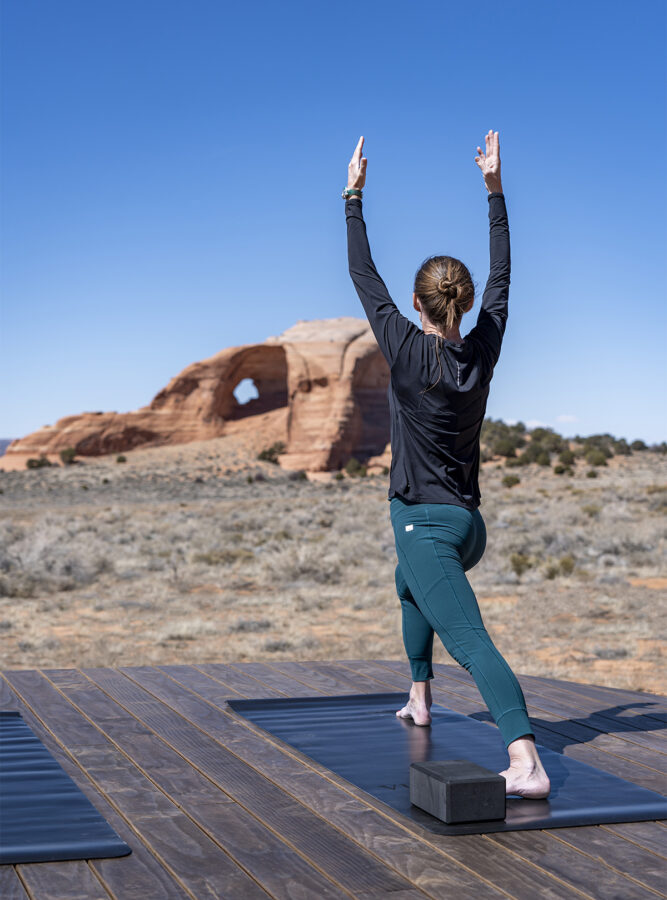
Before you visit Fisher Towers, brush up on your skills during ULUM Moab’s complimentary guided desert sunset photography experience, where you can practice capturing Looking Glass Arch right on the property.
Take the Scenic Drive to Fisher Towers
Getting to Fisher Towers is part of the adventure. From Moab, follow Highway 128 (also known as the Upper Colorado River Scenic Byway) as it traces the Colorado River. Along the way, take in Grandstaff Canyon, the scenery at Big Bend, and views of Castle Rock. As the canyon opens into Professor Valley, the landscape reveals Castle Valley, Fisher Towers, and the La Sals in the distance.
The Fisher Towers turnoff is about 22 miles from the junction of highways 191 and 128. From there, follow a graded gravel road for another 2.2 miles to the trailhead. The road is generally suitable for standard vehicles in dry conditions, but heavy rain can leave it muddy or rutted. Check local weather and road conditions before setting out.
Allow at least half a day to drive Highway 128 and hike the Fisher Towers Trail. Stop for a picnic beside the Colorado River on your return journey.
You can extend your scenic drive through Castle Valley by following the La Sal Mountain Loop. Along the way, the scenery shifts from red rock desert to refreshing high-elevation forest, giving you a sense of just how varied the Moab landscape can be.
Tips for Visiting Fisher Towers, Utah
- Start early (or late): Fisher Towers has little shade, and summer temperatures rise quickly. An early or late afternoon start also makes it easier to find parking during busy periods.
- Bring plenty of water: There is no drinking water at the recreation site. Carry plenty of water, snacks, and sun protection.
- Check the weather: Avoid desert trails when thunderstorms are nearby. Rain can also affect the gravel access road and create flash-flood risks in low areas.
- Wear sturdy footwear: Sandy stretches, loose rock, slickrock, and uneven ledges make shoes with reliable traction a smart choice.
- Stay on the trail: Desert soils are fragile. Follow the trail route and avoid stepping on biological soil crusts.
- Leave no trace: Pack out what you pack in, keep dogs leashed, and take only photos.
Where to Stay in Moab
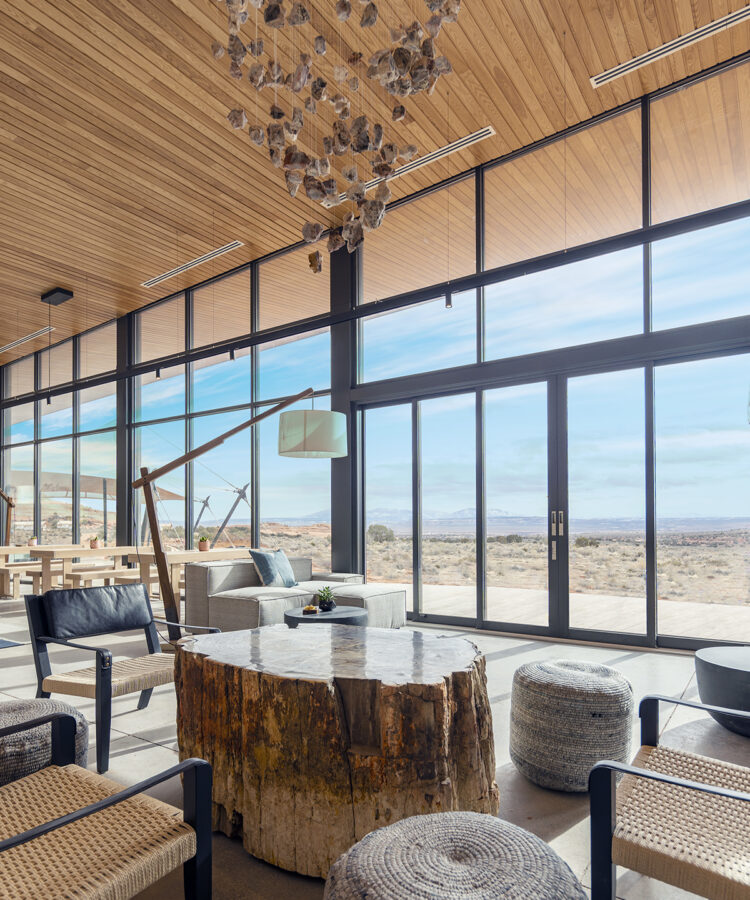
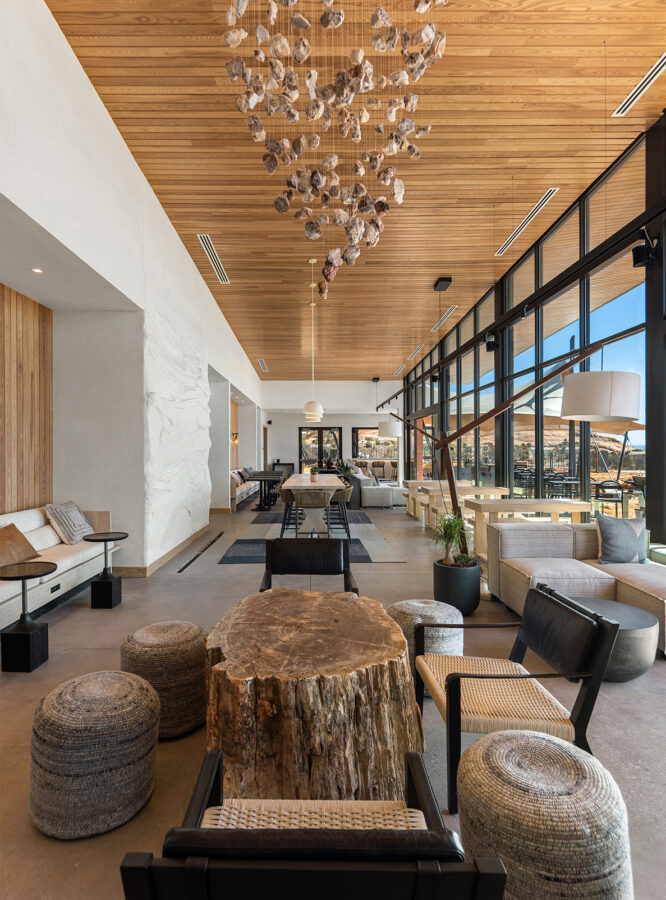
After a day exploring towering sandstone spires, retreat to the comfort of ULUM Moab. Set within a secluded desert landscape just steps from Looking Glass Arch, the resort offers safari-inspired tents and inviting indoor and outdoor lounge spaces designed to bring you closer to nature. Wake to the colors of the desert, then spend your days hiking, climbing, or focusing on wellbeing with resort amenities like hot and cool dipping pools, daily yoga, and massage treatments. By night, enjoy elevated dining inspired by the flavors of the Southwest, followed by s’mores under the stars. With outdoor experiences just beyond your tent, ULUM Moab makes it easy to immerse yourself in the landscape while enjoying upscale amenities, thoughtful design, and exceptional service.
RESERVE YOUR STAY